Cycling Shoe Size Guide: A Comprehensive Overview (Updated 02/17/2026)
Navigating cycling shoe sizes requires understanding brand variations like Nike, Giro, and Specialized, alongside crucial factors such as foot volume and arch support.
Understanding Cycling Shoe Sizing
Cycling shoe sizing differs significantly from standard footwear due to the biomechanics of pedaling and the need for a snug, efficient fit. Unlike everyday shoes where comfort is paramount, cycling shoes prioritize power transfer, demanding a precise fit to minimize energy loss. This precision necessitates careful measurement and consideration of various factors beyond simple foot length.
Understanding the nuances of sizing is crucial, as variations exist between brands – Nike, Giro, and Specialized all have unique sizing characteristics. Furthermore, different cycling disciplines (road, mountain, indoor) often require slightly different shoe fits. Accurate sizing prevents discomfort, hotspots, and potential injuries, ultimately enhancing your cycling experience and performance. Ignoring proper fit can lead to reduced efficiency and long-term foot problems.
Why Accurate Cycling Shoe Size Matters
Precise cycling shoe sizing is paramount for optimal performance and comfort, directly impacting power transfer and preventing injuries. Ill-fitting shoes can cause hotspots, blisters, and numbness, hindering your ride and potentially leading to long-term foot issues. A shoe that’s too large allows foot movement within the shoe, reducing pedaling efficiency and control.
Conversely, a shoe that’s too small restricts blood flow and causes painful pressure points. Accurate sizing ensures a secure connection between your foot and the pedal, maximizing power output. Considering brand-specific fits, like those from Nike, Giro, or Specialized, is vital. Investing time in proper measurement and fit avoids discomfort and unlocks your full cycling potential, making every ride more enjoyable and effective.
Different Types of Cycling Shoes & Sizing Nuances
Cycling shoes aren’t one-size-fits-all; sizing varies based on discipline. Road cycling shoes prioritize stiffness and a snug fit for efficient power transfer, often running narrower. Mountain bike shoes require a more robust toe box for walking and technical terrain, potentially needing a half-size up to accommodate thicker socks and foot swelling.
Indoor cycling/spin shoes often prioritize breathability and comfort, with sizing similar to road shoes but potentially wider. Brand nuances also play a role; Nike, Giro, and Specialized all have unique lasts. Always consult specific size charts, considering foot volume and width. Understanding these distinctions ensures optimal fit and performance for your chosen cycling style.
Road Cycling Shoes: Sizing Considerations
Road cycling shoes demand a precise fit, prioritizing power transfer and minimizing foot movement within the shoe. Expect a snug, almost tight feel – there shouldn’t be excessive toe wiggle room. Many cyclists size up half a size from their street shoe size, but brand variations (Nike, Giro, Specialized) are crucial.
Consider foot volume; a higher volume foot may require a wider shoe or a size up. Pay attention to length and width measurements. A properly fitted road shoe enhances pedaling efficiency and prevents hot spots. Prioritize a secure heel hold to avoid slippage, impacting performance and comfort during long rides.
Mountain Bike Cycling Shoes: Sizing Considerations
Mountain bike (MTB) shoe sizing differs from road shoes, prioritizing protection and walkability alongside performance. A slightly roomier fit is generally preferred to accommodate thicker socks and foot swelling during demanding trails. Expect a bit more toe box space for comfort when hiking or navigating technical sections.
Consider the shoe’s stiffness; stiffer soles enhance power transfer, but can feel less comfortable for walking. Brands like Specialized and Giro offer varying fits, so referencing their size charts is vital. Heel retention is crucial for control, preventing lift during climbs and descents. Prioritize a secure, yet comfortable, fit to maximize both pedaling efficiency and off-bike maneuverability.
Indoor Cycling/Spin Shoes: Sizing Considerations
Indoor cycling and spin shoes often prioritize a snug, secure fit for maximum power transfer during high-intensity workouts. Unlike outdoor shoes, walkability isn’t a primary concern, allowing for a tighter overall fit. Many spin bikes utilize a cleat system compatible with standard road bike cleats, influencing shoe choice.
Breathability is key, as indoor sessions generate significant heat. Look for shoes with ample ventilation. A precise fit minimizes foot movement within the shoe, reducing hotspots and improving efficiency. Consider the shoe’s stiffness; stiffer soles are generally preferred for optimal power delivery. Refer to brand-specific size charts, as sizing can vary.

Measuring Your Feet for Cycling Shoes
Accurate foot measurement is paramount for selecting the correct cycling shoe size. Feet often change size over time, so regular measurement is recommended. Two primary methods exist: utilizing a Brannock device, commonly found in shoe stores, or a DIY tracing method. The Brannock device provides precise length and width measurements, crucial for a comfortable fit.
For the tracing method, place your foot on paper and carefully outline it, wearing the socks you’d typically cycle in. Measure the length from heel to longest toe, and the width at the widest point. Repeat for both feet, as discrepancies are common. These measurements serve as a foundation for converting to appropriate cycling shoe sizes.
Using a Brannock Device for Accurate Measurement
Employing a Brannock device ensures a highly accurate cycling shoe size determination. Begin by placing your heel firmly against the heel cup of the device, ensuring your foot is flat. Adjust the sliding width indicator until it snugly fits the widest part of your foot. Next, note the length measurement where your longest toe aligns with the scale.
Repeat this process for both feet, as slight variations are typical. Always prioritize the measurement of the larger foot when selecting a size. The Brannock device also indicates arch length, which can inform support needs. This detailed measurement provides a solid basis for converting to the correct cycling shoe size, enhancing comfort and performance.
Tracing Your Foot on Paper: A DIY Method
For a convenient at-home measurement, trace your foot on a piece of paper while wearing the socks you’d typically cycle in. Ensure your foot is flat and fully bearing weight. Trace around the entire foot, keeping the pen perpendicular to the paper. Measure the length from the heel to the tip of your longest toe in centimeters or inches.
Repeat for both feet and use the larger measurement. Also, measure the width at the widest point. This DIY method provides a reasonable estimate, but isn’t as precise as a Brannock device. Remember to account for potential swelling during rides when converting these measurements to shoe sizes.
Converting Foot Measurements to Cycling Shoe Sizes
Accurately converting foot measurements is vital for a comfortable ride. US sizes differ from European (EU) and UK standards, necessitating careful conversion. Generally, a US men’s size 10 equates to roughly a EU size 44 and a UK size 9. However, these are approximations; always consult a specific brand’s size chart.
Centimeter measurements offer a more universal approach. For example, a 27cm foot often corresponds to a US size 9.5, EU size 43, or UK size 8.5. Remember that cycling shoes often run smaller than standard athletic shoes, so adding 0.5 to 1 full size is frequently recommended. Prioritize brand-specific charts for optimal fit.

US Shoe Sizes vs. European (EU) Shoe Sizes
Understanding the discrepancy between US and European (EU) shoe sizes is crucial when purchasing cycling shoes online or from brands utilizing EU sizing. A general guideline suggests a US men’s size 9 typically translates to a EU size 42-43. However, this isn’t a rigid rule, as variations exist between manufacturers.
For women, a US size 7 often corresponds to a EU size 38-39. It’s essential to consult specific brand size charts, as some brands run narrower or wider than others. Always prioritize the manufacturer’s recommendations over general conversions to ensure a precise and comfortable fit for optimal cycling performance.
UK Shoe Sizes vs. Cycling Shoe Sizes
Converting UK shoe sizes to cycling-specific sizes requires careful attention, as discrepancies can significantly impact comfort and performance. Generally, a UK men’s size 9 equates to approximately a EU size 43, often aligning with a US size 10. However, cycling shoes frequently run smaller due to the snug fit required for efficient power transfer.
For women, a UK size 6 typically corresponds to a EU size 39. It’s vital to remember that UK sizing can vary slightly between brands. Always refer to the specific brand’s size chart and consider adding a half size to account for the compression experienced during cycling. Prioritize accurate measurement and brand-specific guidance.
Centimeter Measurements to Shoe Size Conversion
Accurate foot length in centimeters is a cornerstone of proper cycling shoe sizing. A foot measuring 27 centimeters generally corresponds to a US men’s size 9, a UK size 8.5, and a European size 42. However, these are approximate conversions; brand-specific charts are essential for precision.
For women, 24.5 centimeters typically aligns with a US size 7.5, a UK size 6, and a EU size 38. Remember to measure both feet, as slight variations are common. Always use the larger measurement. Consider foot width alongside length, as wider feet may require a wider shoe size. Precise centimeter measurements minimize guesswork and enhance fit.
Brand-Specific Sizing Differences
Cycling shoe sizing isn’t standardized; significant variations exist between brands. Nike cycling shoes often run narrower, potentially requiring a half-size up for wider feet. Giro shoes are generally considered true to size, but their Cadet model necessitates consulting their specific size chart. Specialized, known for Body Geometry fit, also has unique sizing; their Sport TR shoes require careful attention to length and width.
Always prioritize checking the brand’s official size chart before purchasing. Women’s Jordan sizing, while primarily for athletic shoes, highlights the importance of brand-specific fit profiles. Ignoring these nuances can lead to discomfort and reduced performance. Consider reading reviews to gauge other cyclists’ experiences with a particular brand’s sizing.
Nike Cycling Shoe Sizing
Nike cycling shoes are frequently reported to run a half-size to a full size smaller than standard athletic shoes, and often feature a narrower fit. Individuals with wider feet should strongly consider ordering a half-size or even a full size up to avoid discomfort and potential pressure points during rides. Pay close attention to the specific model, as variations exist within the Nike cycling range.
Consulting Nike’s official size chart, available on their website, is crucial. Comparing your foot length in centimeters to their chart provides a more accurate starting point. Remember that sock thickness impacts fit; factor this in when measuring. Considering the Women’s Jordan sizing as a reference point for Nike’s general fit can also be helpful, acknowledging a tendency towards a snug profile.
Giro Cycling Shoe Sizing & Size Charts
Giro is known for offering a wider range of sizes and widths compared to some brands, catering to diverse foot shapes. However, Giro sizing can still vary between models – the Cadet model, for example, has specific size availability. Their size charts, readily accessible on the Giro website, are essential for accurate selection, utilizing both US and EU sizing conversions.
Giro emphasizes foot length measurement in millimeters or inches for precise matching. It’s advisable to measure both feet, as discrepancies are common, and select the size corresponding to the larger foot. Consider the intended use; a more aggressive racing shoe might require a snugger fit than a comfortable touring shoe. Always review customer feedback regarding specific Giro models for insights into fit tendencies.
Specialized Cycling Shoe Sizing
Specialized cycling shoes, like the Sport TR Body Geometry model, often run true to size, but individual foot shapes necessitate careful consideration. Specialized utilizes a sizing system incorporating both US and EU measurements, with detailed size charts available on their official website. They emphasize the importance of measuring foot length accurately, ideally in the afternoon when feet are slightly swollen.
Specialized’s Body Geometry fit aims to optimize pedaling efficiency and comfort. When selecting a size, account for sock thickness and the intended riding style. A performance-oriented shoe may benefit from a tighter fit, while endurance rides demand more room. Checking reviews specific to the Specialized model you’re considering can reveal valuable insights into real-world fit experiences.
Key Factors Affecting Cycling Shoe Fit
Achieving optimal cycling shoe fit extends beyond simply matching a foot length to a size chart. Foot volume and width are paramount; a high-volume foot requires a wider shoe, preventing constriction. Arch height and support needs dictate whether you need integrated arch support or custom insoles for proper alignment and pressure distribution.
Furthermore, sock thickness and material significantly impact fit. Thicker socks necessitate a slightly larger shoe size. Consider the climate and riding conditions when choosing sock weight. Ignoring these factors can lead to discomfort, hot spots, and reduced pedaling efficiency. Prioritizing these elements ensures a secure, comfortable, and performance-enhancing fit.
Foot Volume & Width
Foot volume, often overlooked, is crucial for cycling shoe fit. It refers to the overall space your foot occupies, not just length and width. A high-volume foot—thick across the top—needs a shoe with a taller instep to avoid pressure points. Conversely, a low-volume foot benefits from a snugger fit.
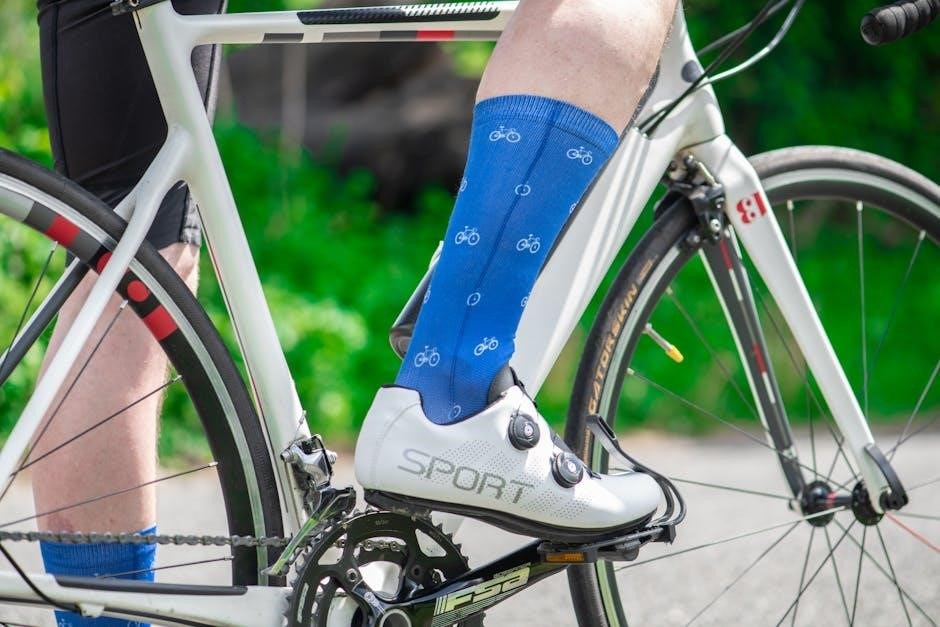
Width is equally important. Cycling shoes come in various widths (narrow, standard, wide). Measuring foot width alongside length is essential. A shoe that’s too narrow will constrict the foot, causing discomfort and potentially numbness. A shoe that’s too wide won’t provide adequate support, leading to inefficient power transfer. Prioritize a secure, yet comfortable, fit.
Arch Height & Support Needs
Understanding your arch height is vital for selecting cycling shoes that provide optimal support and prevent discomfort. High arches generally require shoes with ample cushioning and support to absorb shock and prevent pressure points. Look for shoes with supportive insoles or consider aftermarket options.
Flat feet, or low arches, benefit from shoes with firmer midsoles and arch support to prevent overpronation—the inward rolling of the foot. Some shoes offer adjustable arch supports. Neutral arches typically work well with a variety of shoe types, but still require adequate support for efficient pedaling. Proper arch support enhances power transfer and reduces fatigue.
Sock Thickness & Material
Sock thickness significantly impacts cycling shoe fit; always try shoes with the socks you intend to wear while cycling. Thicker socks necessitate a slightly larger shoe size to avoid a cramped toe box and potential discomfort during rides. Conversely, thinner socks may require a snugger fit to prevent heel slippage.
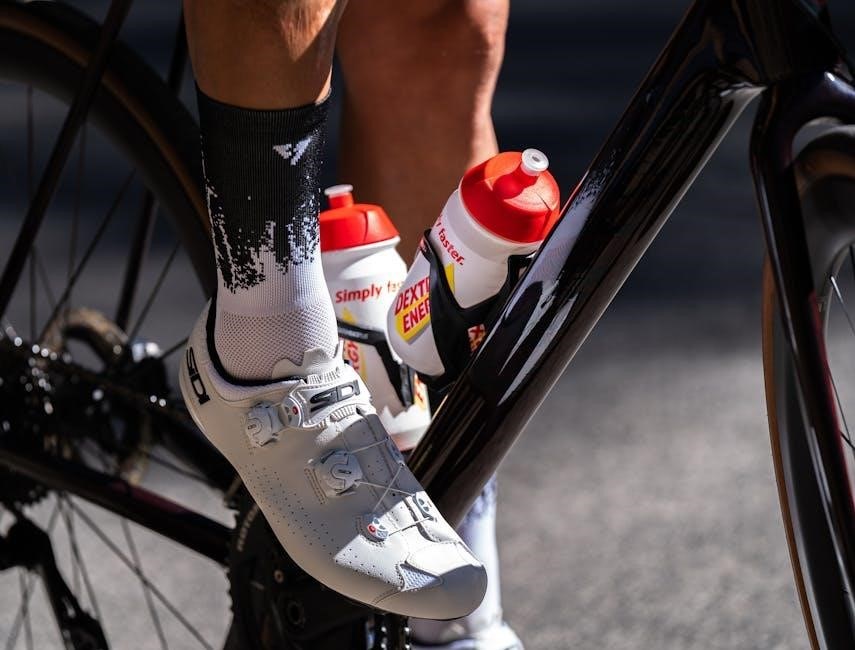
Material also plays a role. Merino wool socks offer excellent moisture-wicking properties and cushioning, while synthetic materials provide durability and breathability. Avoid cotton socks, as they retain moisture and can lead to blisters. Consider seasonal variations – thicker socks for colder weather and thinner, breathable socks for warmer conditions.
Common Cycling Shoe Fit Issues & Solutions
Several fit issues commonly arise with cycling shoes. A tight toe box, often caused by incorrect sizing or foot swelling during rides, can be addressed by sizing up or utilizing shoe stretchers. Heel slippage indicates insufficient shoe tightness or a mismatch in foot volume; try different lacing techniques or consider heel grips.
Hot spots and pressure points signal localized friction. Ensure proper sock choice, adjust cleat position, and consider professional shoe fitting. Regularly inspect shoes for internal seams or irregularities causing discomfort. Don’t ignore these issues – addressing them promptly prevents blisters and enhances cycling performance.
Toe Box Too Tight: Causes & Remedies
A constricted toe box is a frequent cycling shoe complaint, stemming from several factors. Incorrect shoe size is a primary cause, often exacerbated by foot swelling during exertion. Lower volume feet may also struggle with standard-width shoes. This tightness restricts blood flow, leading to numbness and discomfort, hindering performance.
Remedies include sizing up a half or full size. Consider shoes with wider toe box options. Utilizing shoe stretchers can provide localized relief. Ensure proper sock thickness; thinner socks create more space. If discomfort persists, professional shoe fitting is recommended to assess foot shape and identify suitable models.
Heel Slippage: Causes & Remedies
Heel slippage within cycling shoes compromises power transfer and can lead to blisters. Common causes include an improperly tightened closure system, insufficient heel counter support, or a shoe that’s too large. Foot shape also plays a role; narrower heels are more prone to movement. Ignoring this issue can negatively impact cycling efficiency and comfort.
Remedies begin with ensuring the shoe’s closure system – buckles, straps, or Boa dials – is adequately tightened, focusing on the heel. Heel lock techniques, like tightening the top strap more aggressively, can help. Consider heel grips or thicker socks for added cushioning and security. If slippage continues, a different shoe model with a more supportive heel cup may be necessary.
Hot Spots & Pressure Points: Causes & Remedies
Hot spots and pressure points during cycling indicate localized areas of excessive friction or compression within the shoe. These often arise from ill-fitting shoes – too narrow, too wide, or with insufficient volume – combined with improper sock choice or foot biomechanics. Ignoring these issues can quickly escalate to blisters or even nerve damage, severely impacting ride enjoyment.

Remedies involve identifying the precise location of the discomfort. Adjusting cleat position can alleviate pressure on specific foot areas. Experiment with different sock thicknesses and materials to reduce friction. If the shoe consistently causes hot spots, consider a professional bike fit to assess foot structure and shoe compatibility. A wider toe box or a shoe with adjustable volume may be required.
Women’s Specific Cycling Shoe Sizing
Women’s feet generally differ from men’s in terms of length, width, instep height, and heel shape, necessitating specialized sizing considerations for cycling shoes. Traditional sizing often doesn’t account for these anatomical variations, leading to discomfort and reduced performance. The Women’s Jordan sizing guide, while for athletic shoes, highlights the importance of considering foot shape beyond length alone – a principle applicable to cycling.
Women’s cycling shoes typically feature a narrower heel cup, a lower volume instep, and a more streamlined toe box. When selecting a size, prioritize fit over simply converting a men’s size. Many brands offer dedicated women’s models, ensuring a more comfortable and efficient cycling experience. Always try shoes on with cycling socks.
Women’s Foot Anatomy & Sizing Differences
Female feet typically exhibit distinct anatomical characteristics compared to male feet, significantly impacting cycling shoe fit; Women generally possess a narrower heel, a higher arch, and a proportionally longer forefoot relative to overall foot length. These differences mean a standard men’s shoe size, even when downsized, often fails to provide optimal support and comfort.
The metatarsal bones in women’s feet tend to be more spread, influencing the shape of the forefoot. Consequently, a wider toe box is often preferred to prevent constriction and numbness. Understanding these nuances is crucial when selecting cycling shoes, as improper fit can lead to blisters, hot spots, and reduced power transfer. Prioritizing a women’s-specific model addresses these anatomical variations.
The Women’s Jordan Sizing Guide & Relevance to Cycling
While seemingly unrelated, the Women’s Jordan sizing guide offers valuable insight into understanding foot shape variations. Jordan brand often accounts for the narrower heel and higher instep commonly found in women’s feet, mirroring the needs of female cyclists. Comparing foot measurements to Jordan’s charts can provide a baseline for determining appropriate cycling shoe width.
Although cycling shoes don’t directly correlate to athletic sneaker sizing, the principles of accommodating foot volume and shape remain consistent. If a woman consistently finds a specific Jordan size comfortable, it suggests a particular foot profile that should be considered when selecting a cycling shoe with similar width characteristics. This cross-referencing can refine the initial size selection process.
Kids’ Cycling Shoe Sizing
Accurate sizing is paramount for young cyclists, as rapidly growing feet necessitate frequent adjustments. Utilizing a kids’ footwear size chart is crucial, noting that children’s feet grow quickly and inconsistently. Unlike adult sizing, growth allowances are essential; avoid purchasing shoes too snug, anticipating growth spurts.
Regularly check the fit – every few months is advisable – to ensure comfort and prevent hindering pedal stroke efficiency. Consider the sock thickness typically worn during cycling. A slight heel lift is acceptable, but excessive movement indicates a shoe that’s too large. Prioritize safety and comfort, as ill-fitting shoes can lead to discomfort and reduced control.
Kids Footwear Size Chart: A Guide
A reliable kids’ footwear size chart is essential for selecting appropriately sized cycling shoes. Charts typically correlate foot length (in centimeters or inches) with US, EU, and UK sizes. However, remember these are general guidelines; brand-specific variations exist. Always measure both feet, as discrepancies are common, and size based on the larger foot.
Consider that baby shoe sizes differ significantly from toddler and older child sizes. A basic chart might show sizes ranging from baby size 3 (approx. 7.6cm) up to youth size 13 (approx. 22.9cm). Prioritize a snug, secure fit without constriction, allowing room for growth and comfortable sock usage. Regularly referencing updated charts is recommended.
Growth Considerations for Children’s Cycling Shoes
Children’s feet grow rapidly, demanding careful consideration when purchasing cycling shoes. Avoid buying shoes too large, as excessive space compromises pedaling efficiency and can lead to blisters. However, allow approximately 0.5 to 1 cm (¼ to ½ inch) of growth room to accommodate foot development.
Regularly check the fit – every few months is advisable – as outgrowing shoes happens quickly. Consider adjustable features like Velcro straps, which offer flexibility as the foot grows. Prioritize quality over extreme affordability; well-constructed shoes provide better support and durability. Don’t rely on previous shoe sizes; remeasure frequently for optimal fit and comfort during cycling adventures.
Cycling Shoe Size Charts (General Guidelines)
General size charts offer a starting point, but remember brand-specific variations exist. Road bike shoe sizes typically align closely with standard shoe sizes, while mountain bike shoes may run slightly larger to accommodate thicker socks and wider foot positioning. Spin/Indoor cycling shoes often prioritize a snug, secure fit for maximum power transfer.
Refer to individual brand charts for the most accurate measurements. A US men’s size 10 might translate to a European 44 or a UK 9. Length measurements in centimeters are crucial for precise conversions. These charts are guidelines; always prioritize fit and comfort over relying solely on a chart’s recommendations.
Road Bike Shoe Size Chart
Road bike shoes demand a precise fit for optimal power transfer and comfort during long rides. Generally, road shoes fit similarly to regular athletic shoes, but a snug toe box is essential. Consider a half-size up if you’re between sizes or prefer extra toe room. A typical chart might show US sizes 7-13, corresponding to EU sizes 39-47, and UK sizes 6-12.
Length measurements in centimeters are vital; for example, 27cm could equate to a US 9.5, EU 43, or UK 8.5. Remember, Specialized shoes, like others, may vary. Prioritize trying shoes on with cycling socks to ensure an accurate fit, avoiding pressure points or heel slippage.
Mountain Bike Shoe Size Chart
Mountain bike shoes often require a slightly roomier fit than road shoes to accommodate thicker socks and foot swelling during demanding trails. A snug heel is crucial to prevent lift, while allowing toe movement for hiking sections. Charts typically range from US sizes 6-14, aligning with EU sizes 38-48 and UK sizes 5.5-13.5.
Centimeter measurements are key; a 29cm foot might correspond to a US 11, EU 45, or UK 10.5. Giro Cadet cycling shoes, for instance, come in various sizes – always consult their specific chart. Prioritize a secure fit without excessive tightness, ensuring comfort during both pedaling and walking portions of your ride.
Spin/Indoor Cycling Shoe Size Chart
Indoor cycling shoes prioritize a secure, performance-oriented fit, as riders experience intense, stationary efforts; Unlike mountain biking, hiking isn’t a concern, so a tighter, more precise fit is preferred. Size charts generally mirror road shoe sizing, ranging from US women’s 5 to US men’s 14, correlating with EU sizes 36-48 and UK sizes 3-13.
Accurate centimeter measurements are vital; a 27.5cm foot could equate to a US 9, EU 42, or UK 8. Consider sock thickness – thinner socks allow for a tighter fit. Refer to brand-specific charts, as sizing varies. A snug, yet comfortable, fit minimizes foot movement within the shoe, maximizing power transfer during your spin class.