Wedding Ring Guide: A Comprehensive Overview
The Knot provides essential tools for wedding planning, from vendor searches in cities like San Antonio, Charlotte, and Chicago, to checklists and budgeting advice․
Effortlessly create a free wedding website, manage RSVPs, and access reliable advice on relationships and wedding details – all within The Knot’s platform․
Understanding Wedding Ring Traditions
Historically, the tradition of wedding rings dates back to ancient Egypt, symbolizing eternity with their circular shape and the hole representing a gateway to the unknown․
Romans initially used rings made of iron, evolving to gold as a symbol of wealth and status․ Early Christians adopted the ring as a symbol of commitment and a public declaration of love․
Over time, customs varied, with rings worn on different fingers before settling on the fourth finger of the left hand, believed to have a vein directly connected to the heart – the ‘vena amoris’․
Today, The Knot assists couples in navigating these traditions while personalizing their choice, offering resources to understand the historical significance alongside modern styles and preferences for a meaningful symbol․
Historical Significance of Wedding Rings
Ancient Egyptians are credited with initiating the wedding ring tradition around 4800 years ago, crafting rings from braided reeds or hemp, worn on the third finger of the left hand․
Romans adopted the practice, initially using iron rings symbolizing strength and permanence, later transitioning to gold signifying wealth and status, though often viewed as a purchase contract․
Medieval Europe saw rings become increasingly ornate, incorporating gemstones and inscriptions, solidifying their role as symbols of commitment and fidelity within Christian marriage ceremonies․
The ‘vena amoris’ belief, popularized during this era, linked the ring finger directly to the heart, further cementing the ring’s romantic significance, a tradition The Knot acknowledges when assisting couples today․
Metal Types: A Detailed Comparison
Selecting the right metal is crucial, impacting durability, cost, and aesthetic․ The Knot highlights several options for couples navigating this decision․
Gold, in yellow, white, and rose variations, remains a classic choice, offering malleability for intricate designs, though purity affects hardness․
Platinum stands out for its exceptional durability and hypoallergenic properties, but comes with a higher price tag, a factor The Knot’s budgeting tools address․
Palladium presents a modern, affordable alternative to platinum, sharing similar qualities with a lighter weight, while Titanium and Tungsten offer strength and affordability․
Gold Wedding Rings (Yellow, White, Rose)
Gold remains a timeless and popular choice for wedding rings, available in three primary colors: yellow, white, and rose․ Yellow gold’s classic warmth complements various skin tones, while white gold offers a modern, sleek appearance, often achieved with a rhodium plating that requires periodic reapplication․
Rose gold, gaining popularity, derives its blush hue from copper alloys, providing a romantic and unique aesthetic․ The Knot emphasizes that gold’s purity (measured in karats) impacts its durability; lower karat gold is more durable due to added alloys․
Consider lifestyle and personal preference when selecting a gold color and karat weight․
Platinum Wedding Rings: Durability and Cost
Platinum is renowned for its exceptional durability and hypoallergenic qualities, making it an excellent choice for everyday wear․ Unlike gold, platinum doesn’t tarnish or fade, retaining its luster for a lifetime․ However, this superior quality comes at a higher price point compared to gold or other metals․
The Knot highlights that platinum’s density means rings will feel heavier than those made from comparable gold designs․ Scratches on platinum don’t disappear but are redistributed, forming a patina that some find desirable․
Consider platinum if longevity and minimal maintenance are priorities, despite the investment․
Palladium Wedding Rings: A Modern Alternative
Palladium presents itself as a contemporary and often more affordable alternative to platinum, sharing a similar silvery-white appearance․ Belonging to the platinum family, it boasts natural rarity and excellent durability, resisting tarnishing and corrosion effectively․ This makes it suitable for those with sensitive skin, offering a hypoallergenic option․
While not explicitly detailed on The Knot within the provided text, palladium’s increasing popularity stems from its combination of desirable qualities and a generally lower price tag than platinum․
It’s a strong contender for couples seeking a precious metal with lasting beauty․
Titanium & Tungsten: Affordable and Strong Options
Titanium and tungsten rings represent budget-friendly choices without sacrificing durability․ These metals are exceptionally strong, resisting scratches and bending far better than traditional gold or platinum․ Tungsten carbide, in particular, is known for its hardness, though it can be brittle and prone to shattering under significant impact․
While The Knot focuses on venue and vendor details, these materials offer practical benefits for active lifestyles․
They are excellent options for those prioritizing strength and affordability, providing a modern aesthetic distinct from classic precious metals․
Ring Styles for Him and Her
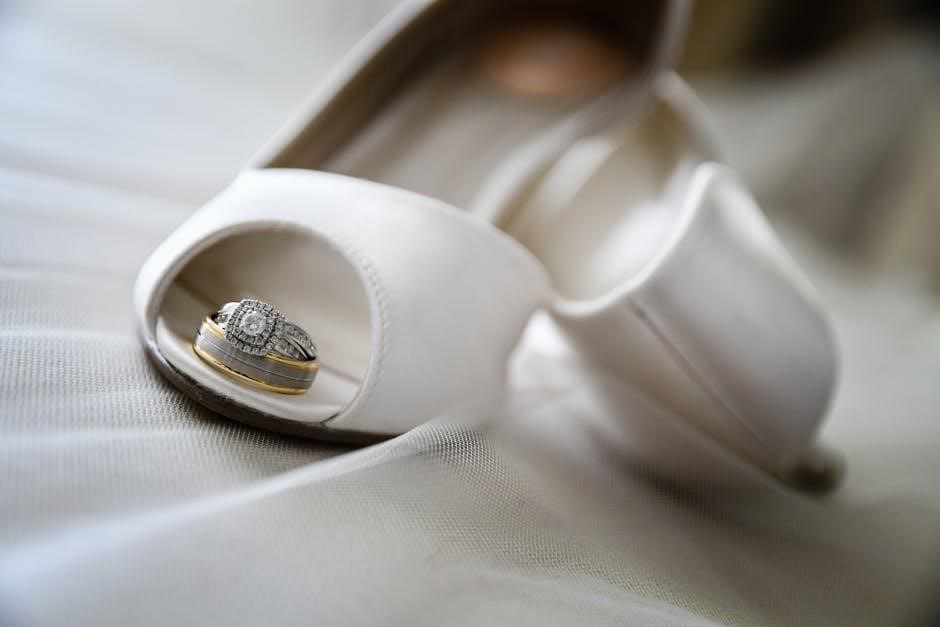
Selecting ring styles involves considering personal preferences and coordinating aesthetics․ Classic bands offer timeless simplicity and elegance, appealing to those who favor understated designs․ Diamond wedding rings introduce sparkle and sophistication, with choices varying in cuts, clarity, and carat weight․
Eternity rings symbolize everlasting love through a continuous circle of stones․ Couples can opt for matching rings, creating a unified look, or choose complementary styles that reflect individual personalities․
The Knot assists in planning the overall wedding aesthetic, which should extend to ring selection, ensuring harmony and a cohesive visual theme․
Classic Bands: Simplicity and Elegance
Classic bands represent enduring love with their understated beauty and timeless appeal․ These rings prioritize clean lines and a focus on the metal itself, offering a sophisticated look suitable for any style․ They are a popular choice for both men and women, often serving as a foundation for more elaborate designs later on․
The simplicity of a classic band allows it to be worn comfortably every day, symbolizing a lasting commitment․ The Knot highlights the importance of considering personal style when selecting wedding details, and classic bands perfectly embody a refined, enduring aesthetic․
Diamond Wedding Rings: Cuts, Clarity, and Carat
Diamond wedding rings symbolize eternal love and commitment, with their brilliance captivating for generations․ Understanding the “Four Cs” – Cut, Clarity, Carat, and Color – is crucial when selecting a diamond․ The cut significantly impacts a diamond’s sparkle, while clarity refers to the absence of inclusions․ Carat weight determines the diamond’s size, and color influences its value․
The Knot emphasizes the importance of finding wedding vendors who can guide you through these choices․ Choosing a diamond involves balancing personal preference with budget considerations, ensuring a ring that reflects your unique love story and lasting value․
Eternity Rings: Symbolism and Design
Eternity rings, a beautiful expression of unending love, feature a continuous line of identically cut diamonds encircling the entire band․ This design symbolizes a love that knows no beginning and no end, making them popular choices for anniversaries or as wedding bands themselves․ Variations include full eternity rings, where diamonds cover the entire band, and half eternity rings, with diamonds adorning only the upper portion․
The Knot highlights the importance of personalized details in wedding planning․ Selecting an eternity ring involves considering the diamond cut, setting style, and metal type to create a truly meaningful and lasting symbol of your commitment․
Matching vs․ Complementary Rings
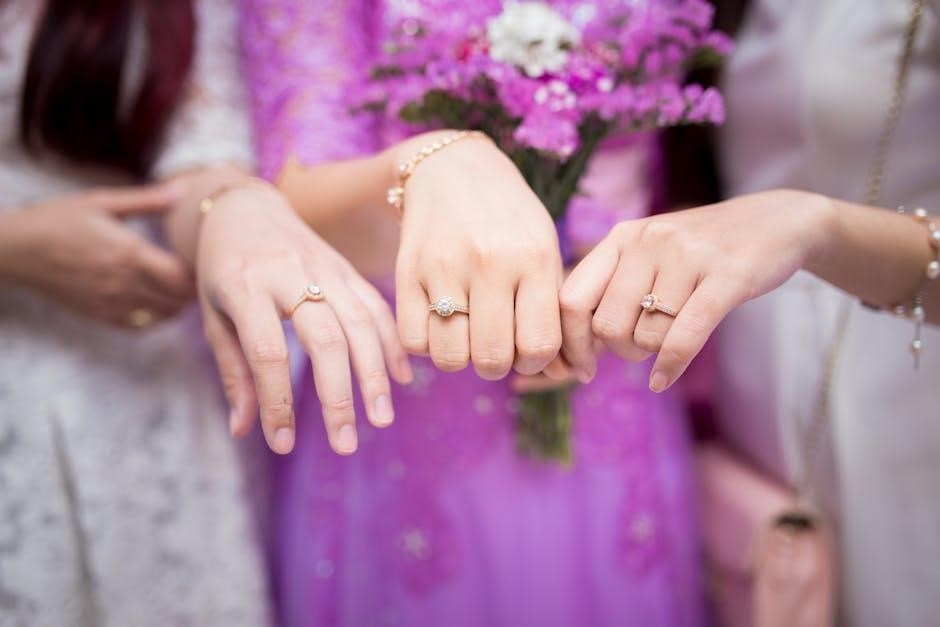
Choosing wedding rings involves deciding between matching sets or complementary designs․ Matching rings, identical in style and metal, symbolize unity and equality․ However, many couples prefer complementary rings, where designs coordinate without being precisely the same․ This allows for individual expression while still representing a shared commitment․
The Knot emphasizes personalization in wedding planning, and ring selection is no exception․ Complementary rings might feature similar metal tones but different diamond settings, or contrasting band widths․ Ultimately, the best choice reflects the couple’s unique style and preferences, creating a lasting symbol of their love story․
Ring Size and Fit: Ensuring Comfort
A comfortable fit is paramount when selecting wedding rings․ Rings that are too tight can cause discomfort and restrict circulation, while those too loose risk slipping off․ Accurate ring sizing is crucial, and professional measurements are highly recommended․ Consider factors beyond just diameter, such as band width, as wider bands generally require a slightly larger size․
The Knot highlights the importance of meticulous planning for a stress-free wedding․ Ensuring a proper ring fit contributes significantly to long-term enjoyment․ Account for potential fluctuations in finger size due to temperature or time of day when determining the ideal size for a lifetime of wear․
Finding Your Ring Size Accurately
Determining your ring size accurately is essential for a comfortable fit․ Several methods exist, including visiting a jeweler for a professional measurement – the most reliable option․ Alternatively, you can use a ring sizing chart and measure an existing ring that fits well, ensuring it’s a similar width to your desired style․
The Knot emphasizes detailed planning for a seamless wedding experience․ Remember that finger size can fluctuate, so measure at the end of the day when fingers are typically warmer․ Online tools can offer guidance, but professional verification is always best․ A properly sized ring ensures a lifetime of comfortable wear and enjoyment․
Ring Width and Profile Considerations
Beyond size, ring width and profile significantly impact comfort and appearance․ Wider bands (8mm+) offer a bolder look but can feel bulky, while narrower bands (4-6mm) are more subtle and comfortable for everyday wear․ Profile refers to the ring’s inner shape – flat, rounded, or comfort-fit․
The Knot highlights the importance of detailed planning, extending to ring selection․ Comfort-fit rings have a slightly rounded interior for enhanced comfort; Consider your lifestyle; active individuals might prefer a lower profile to avoid snagging․ Ultimately, the best width and profile depend on personal preference and hand shape․
Budgeting for Wedding Rings
Establishing a realistic budget is crucial when selecting wedding rings․ Costs vary dramatically based on metal type, gemstones, and design complexity․ The Knot emphasizes comprehensive wedding planning, and rings are a significant expense․ Average costs depend on choices – simple bands are more affordable than diamond-studded designs․
Explore financing options and payment plans offered by jewelers to manage expenses․ Prioritize what matters most – perhaps a larger diamond or a specific metal․ Remember to factor in potential engraving costs and insurance․ Careful planning, as suggested by The Knot’s resources, ensures you find beautiful rings within your financial means․
Average Costs Based on Metal and Design
Wedding ring costs fluctuate widely․ Simple gold bands typically range from $500 to $2,000, depending on karat weight and design intricacy․ Platinum rings, known for durability, generally start around $1,500 and can exceed $5,000․ Palladium offers a mid-range price point, often between $800 and $2,500․
Titanium and tungsten are the most affordable options, frequently under $500․ Diamond rings significantly increase the price; a solitaire diamond can add $2,000-$10,000+ depending on the four Cs․ The Knot highlights the importance of detailed budgeting to navigate these varying costs effectively, ensuring a beautiful ring within your financial plan․
Financing Options and Payment Plans
Many jewelers offer financing options to help manage the cost of wedding rings․ These often include installment plans with varying interest rates and terms․ Credit card financing is another avenue, but be mindful of APRs․ Some retailers partner with financing companies specializing in wedding-related expenses․
The Knot suggests exploring layaway plans as a potential option for spreading out payments․ Carefully review the terms and conditions of any financing agreement before committing, considering factors like monthly payments and total interest paid․ Budgeting tools can help determine affordable payment schedules․
Caring for Your Wedding Rings
Proper care ensures your wedding rings maintain their brilliance for years․ Regular cleaning is crucial; mild soap and warm water are generally safe for most metals․ Avoid harsh chemicals, abrasive cleaners, and ultrasonic cleaners for delicate stones or settings․ Soft cloths are best for polishing, preventing scratches․
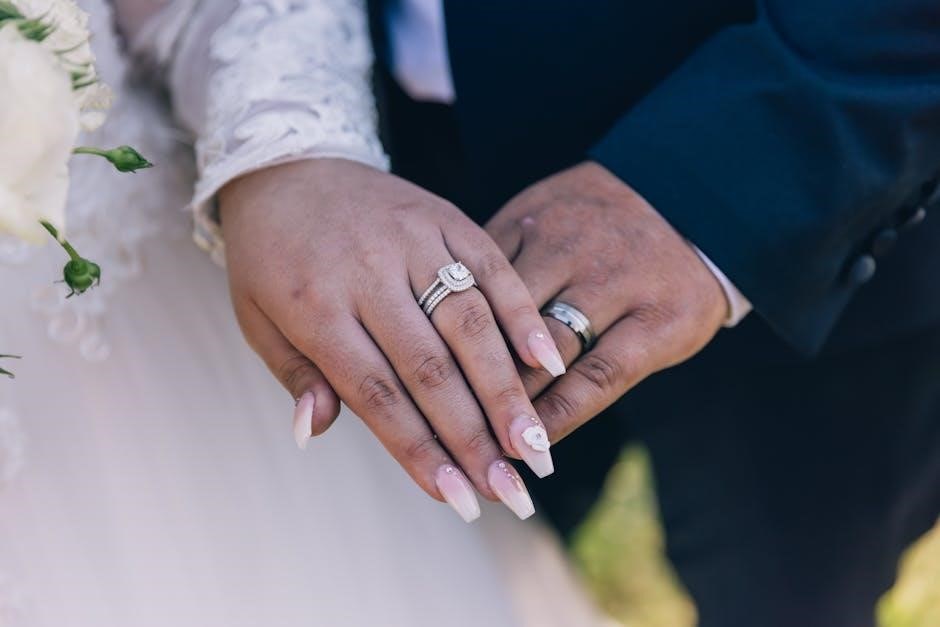
Consider professional cleaning and inspection annually to check for loose stones or structural issues․ The Knot emphasizes the importance of removing rings during strenuous activities to prevent damage; Store rings separately in a soft pouch or lined box to avoid scratches and tarnishing․
Cleaning and Maintenance Tips
To keep your wedding rings sparkling, a gentle routine is key․ Use warm water, mild dish soap, and a soft toothbrush for regular cleaning․ Rinse thoroughly and dry with a lint-free cloth․ Avoid chlorine, ammonia, and abrasive cleaners, as these can damage metals and stones․
For deeper cleaning, consider a professional jeweler’s services․ They can safely remove built-up grime and inspect for any potential issues․ The Knot suggests removing rings during activities like gardening or exercising to prevent scratches and damage․ Regular inspection helps maintain their beauty․
Insurance and Protection Against Loss
Protecting your valuable wedding rings is crucial․ Consider adding a rider to your homeowner’s or renter’s insurance policy specifically covering jewelry․ This provides financial protection against loss, theft, or damage․ Document your rings with appraisals and photographs for insurance purposes․
The Knot emphasizes the importance of being mindful of where you store and wear your rings․ Avoid leaving them unattended in public places․ When traveling, keep them secure and consider leaving valuable rings at home․ Regular insurance reviews ensure adequate coverage as values change․
Customizing Your Wedding Rings
Personalizing wedding rings creates a unique symbol of your love․ The Knot highlights engraving options as a popular choice, allowing you to inscribe meaningful dates, initials, or phrases․ Consider different stone setting styles to achieve the desired look, impacting the ring’s overall aesthetic and security․
Beyond standard designs, explore custom ring creation with a jeweler․ This allows for complete control over metal type, stone selection, and intricate detailing․ Remember that customization often increases cost and lead time, so plan accordingly․ A truly bespoke ring reflects your individual style and story․
Engraving Options: Personalizing Your Rings
The Knot emphasizes engraving as a beautiful way to personalize wedding rings, transforming them into cherished heirlooms․ Common choices include wedding dates, initials, or short, meaningful phrases that resonate with the couple’s journey․
Font styles range from classic and elegant to modern and artistic, influencing the overall aesthetic․ Consider the ring’s metal and width when selecting a font – delicate engravings suit thinner bands, while bolder fonts work well on wider rings․ Internal engravings offer a discreet, intimate touch, while external engravings showcase the message proudly․ Explore different languages for a unique expression of love․
Stone Setting Styles: Choosing the Right Look
The Knot highlights that selecting a stone setting significantly impacts a ring’s appearance and security․ Prong settings, classic and popular, securely hold the stone with metal claws, maximizing light exposure․ Bezel settings encircle the stone with metal, offering excellent protection and a sleek, modern look․
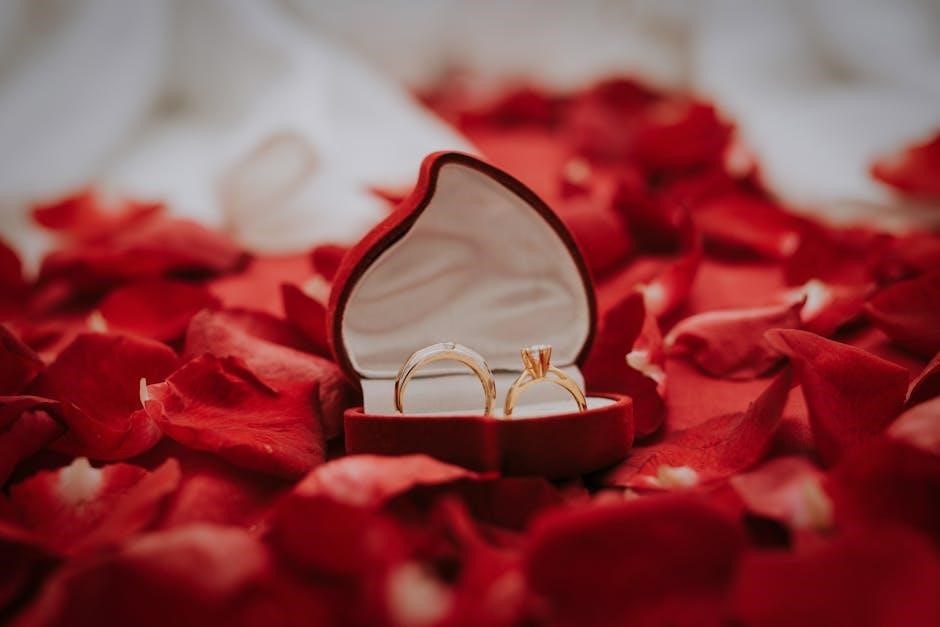
Channel settings feature stones set within a row, creating a seamless, sophisticated band․ Pave settings utilize numerous small stones closely set together, delivering dazzling sparkle․ Tension settings suspend the stone between metal ends, creating a contemporary, minimalist aesthetic․ Consider lifestyle and stone type when choosing – active lifestyles benefit from secure bezel or channel settings․